After the local elections: The ANC blame game and complex coalition talks to come
What's next for local government? Stephen Grootes talks to analyst Rebone Tau and Ntiyiso Consulting Group's Miyelani Holeni.
Paula Luckhoff
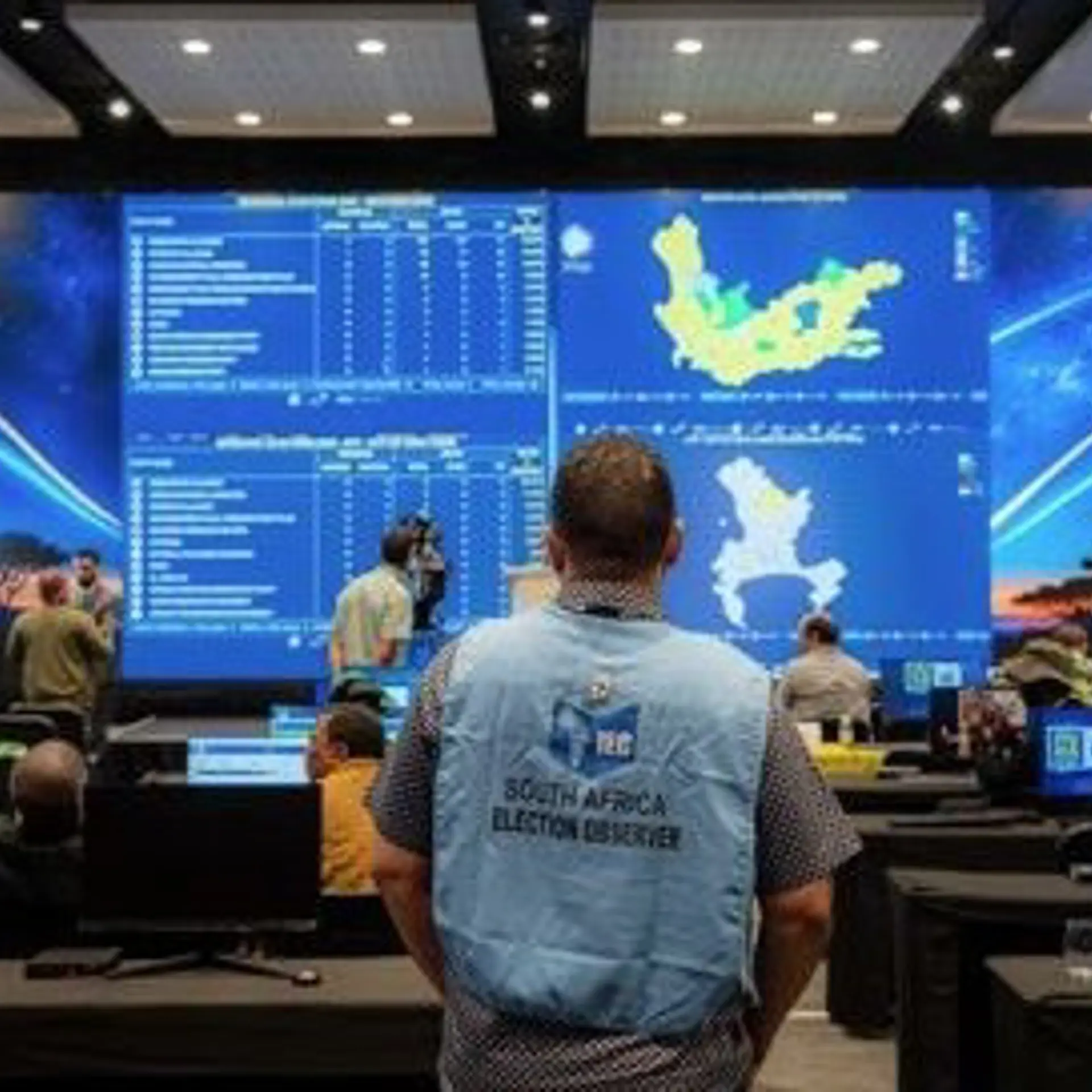
Election observers at the ROC in Cape Town. Image: EWN
EWN
As vote counting enters the final stages and the Electoral Commission of South Africa (IEC) moves towards the collating of results, the changes the country can expect to the political landscape are taking shape.
The local government elections indicate a further decline in support for the ANC and the prospect of two weeks of coalition negotiations to come in many metros.
Stephen Grootes gets comment from Rebone Tau, political commentator and author of 'The Rise and Fall of the ANCYL'.
Tau talks about the shape the blame game will take, foreseen within the ANC.
RELATED: Higher voter turnout in urban centres signals more trouble for ANC - political analyst
Talking to party leaders, she says, you can see they are very angry.
"I think nobody wants to take accountability. For us to be here is nothing surprising because we saw it in 2016, in 2021, 2024, and ultimately now."
What has upset them most, is the drop in the township vote, she says.
"The DA and the EFF failed to get the township vote, with Action SA shocking many people. We've been talking right now about Atteridgeville (outside Pretoria), where Electricity Minister Kgosientsho Ramokgopa is from. You've got Thembisa (East Rand), where Gauteng Premier Panyaza Lesufi come from - they lost to Action SA. I'm told in Soweto I think in Zone 8, they've lost two wards... "
"This is the heartland of the ANC and they're going to blame each other. I think it is going to be very difficult in 2027 to go to that elective conference for the current sitting leadership because they're going to drop below that 40% we saw in 2024."
How are these shifts going to affect service delivery, as political parties' representation on municipal councils changes?
RELATED:
- Parties cautiously optimistic as vote-counting continues in South Africa’s metros
- Parties brace for complex coalition talks as fragmented results roll in
Wholesale change is certainly coming, Tau remarks, as we see the narrowing of votes between the traditionally big parties and then the up-and-coming parties.
When it comes to the permutations in terms of coalitions in local government, the best we can hope for is two, or maximum three parties, to minimise disruption, she says.
"But the moment you have, five or six parties involved, you start to now pull the coalition into many different splinters, which is difficult to manage. And that is the very heart of where service delivery is because if there's no coherence in the management or the governance, that's where it spills into service delivery."
The world "turns quite slowly" at metros, remarks Miyelani Holeni, group chief adviser at Ntiyiso Consulting Group.
He talks about a 36-month plan to get all the moving parts working coherently under a new coalition government.
Holeni zeroes in on the example of embattled Johannesburg, particularly complex because it has municipal-owned entities - take a listen in the interview audio at the top of the article.