ANC-DA coalition talks could threaten stability of South Africa's GNU, analyst warns
Political analyst Sandile Mnguni warns that ANC-DA coalition negotiations at municipal level could threaten the stability of South Africa's Government of National Unity in the long term.
Kabous Le Roux
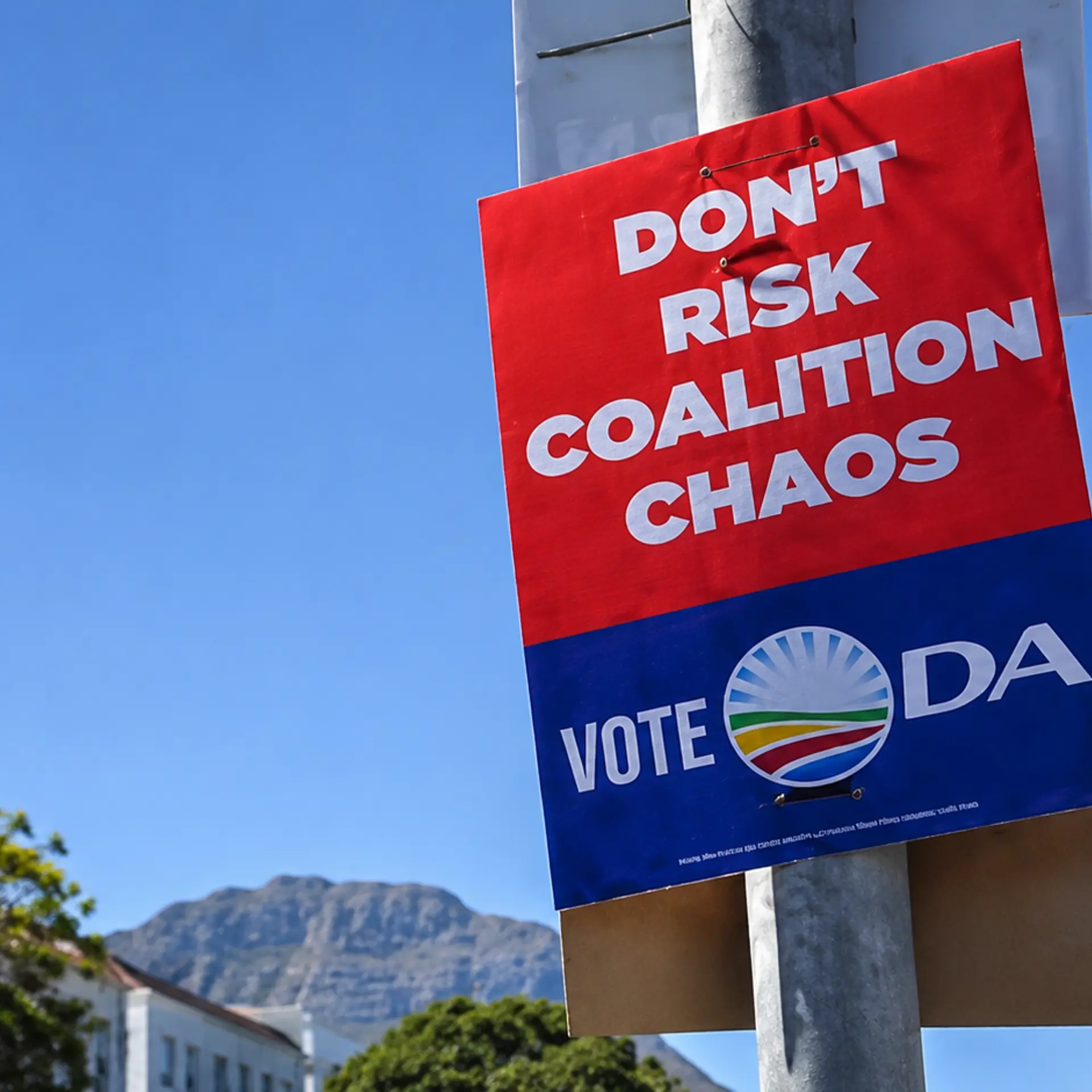
A DA election poster warns voters against the risk of coalition chaos.
The African National Congress (ANC) and Democratic Alliance's (DA) ongoing coalition negotiations at the municipal level could have far-reaching consequences for South Africa's Government of National Unity (GNU), a political analyst has warned.
Sandile Mnguni says disagreements over the formation and leadership of local government coalitions could eventually undermine the stability of the national arrangement between the two parties.
Speaking to 702's John Perlman on Monday, Mnguni said tensions within the ANC over working with the DA, coupled with dissatisfaction among some supporters, could create long-term problems for the GNU.
While the current negotiations are focused on forming stable municipal governments following the local government elections, Mnguni believes the political consequences could extend well beyond local government.
Related articles:
— 'Revolving door' likely to shape SA's coalition future, says political analyst
— ANC broadens search for coalition parties as municipal councils deadline looms
— Analyst Wayne Sussman warns GNU-style coalitions won't work in local government
— ANC casts net wide for municipal coalitions
ANC-DA tensions could threaten GNU stability
Mnguni said some ANC members were reluctant to enter into coalitions with the DA, partly because of the party's declining electoral support and unhappiness among some of its supporters with the existing GNU arrangement.
He warned that the outcome of municipal negotiations could have implications for the continuation of the national partnership.
"I do see some of these conversations in the long term having an impact in relation to the stability and the continuation of the current arrangement with the Government of National Unity between the ANC and the Democratic Alliance," he said.
However, Mnguni cautioned against assuming that the national arrangement was immediately under threat.
He said the situation could become more complicated if the parties struggled to reach agreements over who would lead municipal governments, particularly when it came to mayoral positions.
"If it happens that they don't find each other in relation to agreeing on the running of the municipalities, or even if they do find agreement in terms of working in the municipalities, some of the questions may be around who is going to be leading some of these positions, such as the mayor," he said.
Such disagreements could expose the GNU to instability, although successful negotiations at the municipal level could temporarily ease tensions.
Mnguni also pointed to the 2029 elections as an important consideration, saying political parties were increasingly thinking about their short-term electoral interests.
He cautioned that agreements reached now might not necessarily hold over the longer term, with disagreements potentially emerging in the years ahead.
Service delivery remains a major concern for voters
Asked whether the ANC's relationship with the DA had contributed to voters abandoning the governing party, Mnguni said dissatisfaction among the electorate was driven by several factors.
He identified service delivery and national issues as particularly important considerations, especially among a new generation of voters who were less motivated by historical and ideological loyalties.
"I think it's a cocktail of everything," he said.
"But what has been more impactful in relation to the behaviour or how the electorate has been voting is more of the issues of national interest and especially issues around service delivery."
Water shortages and the government's response to corruption were among the issues influencing voter behaviour, he said.
Mnguni suggested that while some voters remained attached to political parties because of their historical backgrounds and ideological positions, these considerations were increasingly competing with practical concerns about how government performs.
Municipal coalition picture remains fluid
Despite the political tensions, Mnguni said it was too early to draw firm conclusions about the direction of the ANC-DA relationship.
He said negotiations remained fluid because political dynamics differed significantly between municipalities.
In some areas, the ANC needed the DA to secure a governing majority, while in others the DA needed the ANC. Both parties could also potentially reach agreements with smaller political parties or independent councillors.
Mnguni also pointed to reports of discussions between the DA and the uMkhonto weSizwe (MK) party in some municipalities, despite the apparent political distance between the two parties.
"Things are very fluid. They are still open to a number of changes," he said.
He added that it was difficult to predict where negotiations would ultimately lead, with different political configurations emerging across the country.
For now, the municipal coalition negotiations remain unresolved, but Mnguni's warning is that the decisions taken at the local government level could have consequences for the stability of South Africa's national government in the years to come.