DA to begin Western Cape coalition talks in councils it has not obtained outright majority
So far, 16 of the 25 municipalities have been declared hung councils putting the DA in complete charge of only seven municipalities outside of the City of Cape Town.
Lindsay Dentlinger
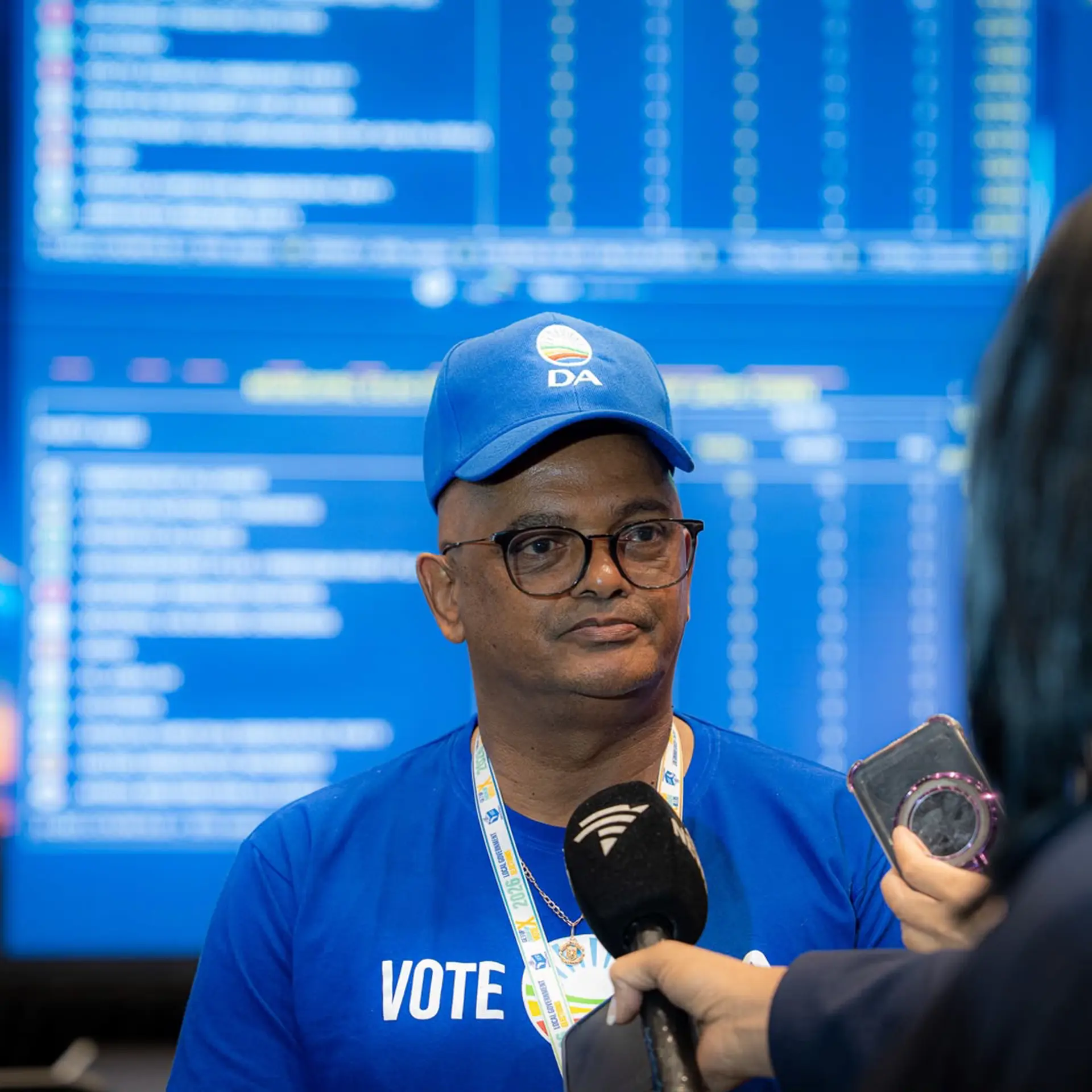
DA Provincial Executive Committee member Grant Twigg at the ROC in Cape Town. Picture: Jared Moorgas/EWN
Jared Moorgas/EWN
As much as the Democratic Alliance (DA) is in the driving seat in the Western Cape, it will have to consider how to stabilise many of the councils where it has not obtained an outright majority.
So far, 16 of the 25 municipalities have been declared hung councils, putting the DA in complete charge of only seven municipalities outside of the City of Cape Town.
80% of the provincial vote has now been captured, and 61% of the Cape Town metro, which makes up 70% of the voting bloc.
The DA may be celebrating early victories, but the next chapter on coalitions is about to start.
While the party has emerged as a leading party in 19 municipalities, it has only cracked the 51% threshold to take complete control of seven of them, so far.
Despite the increased number of hung councils when compared to 2021, the DA’s provincial executive committee member Grant Twigg said he does not view the situation as a regression for the DA.
"Residents and the voters have spoken. Maybe it’s something that we need to get to understand why we have dropped in some areas, and why we’ve gone back. I don’t necessarily think we’ve done too badly."
Twigg said this weekend will be dedicated to coalition talks and, right now, the party’s hard line aside, there are no preferred partners.
"Residents can know we will place them first in terms of what we do and the coalitions we put together."
Despite an equal number of seats attained in the Laingsburg municipality, with a slightly higher percentage, ActionSA has emerged as the leading party over the DA, leaving the bitter rivals to thrash out whether they can work together to govern.