EXPLAINED | Young voters, low turnout: Why?
On the 4th of November, South Africa will go to the polls, and more young people are registered to vote than in the last local government elections.
Kgomotso Modise
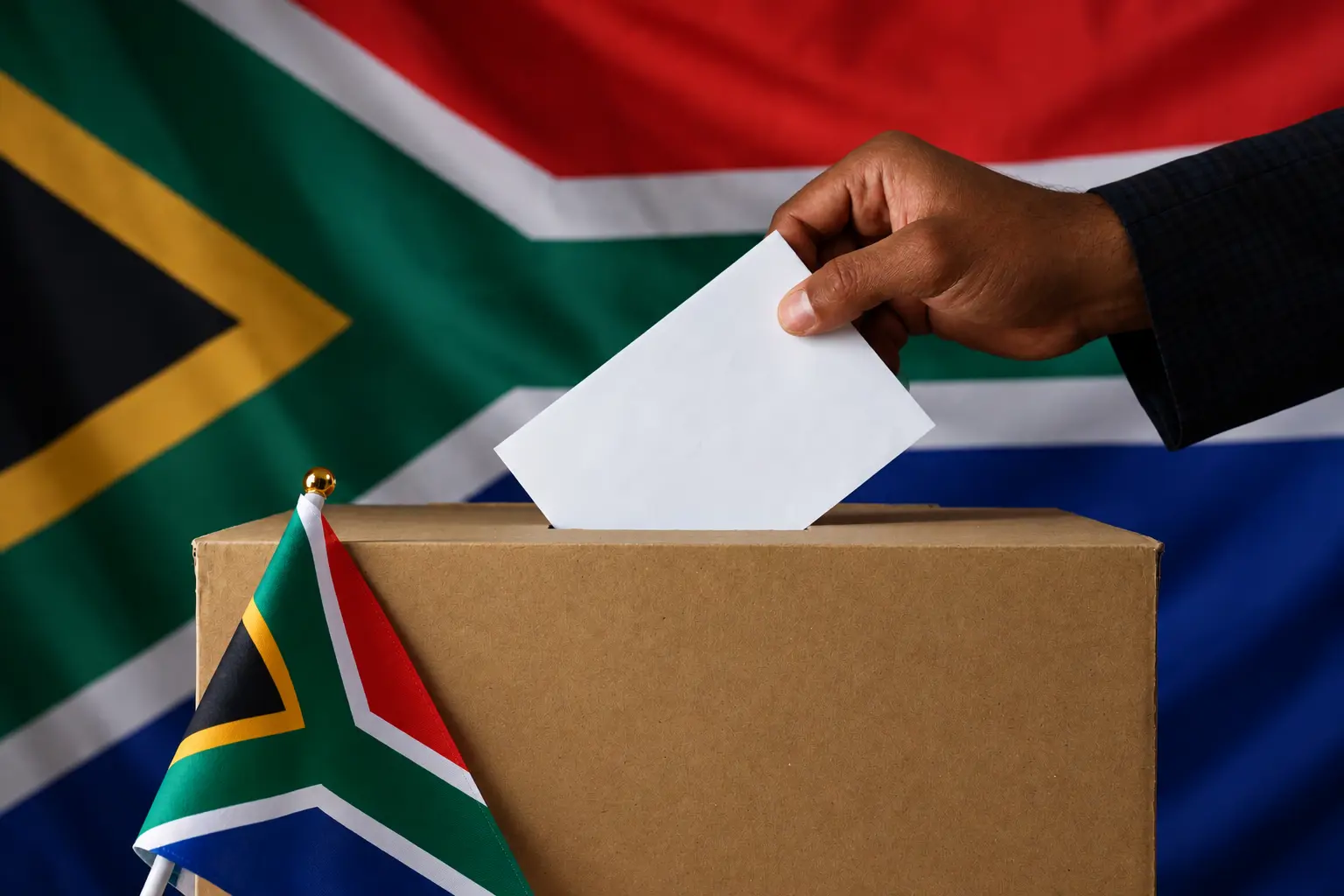
A voter casts a ballot against the backdrop of the South African flag ahead of the 2026 local government elections, as 546 political parties and nearly 137,000 candidates contest seats across the country. (Picture credit: atlasfoto/123rf)
Picture credit: atlasfoto/123rf
As South Africa edges closer to the local government elections with political parties visibly ramping up their campaigns, the youth vote could potentially be the ultimate decider on who gets to run the country’s towns and cities.
On the 4th of November, South Africa will go to the polls, and more young people are registered to vote than in the last local government elections.
In 2021, just under 4.4 million voters in their twenties were on the roll. Today that number has increased by more than a million, with 5.5 million registered young people.
From these numbers, it’s clear that young people have the numbers to change the outcome, but will they use them?
Numbers in the past
Over the years, young people’s share of the voters roll has had its highs and lows. In the 2021 local government elections, people in their 20s made up 17% of registered voters.
That number dipped in the 2024 national elections to under 16%.
Today it has climbed up to 19%. While those numbers are worth noting, they are not an indication of voter turnout; in fact, the number registered young voters
Turnout
In 2021, voters in their twenties recorded the lowest turnout of any other age group. 35 percent of registered voters in that age group came out to vote.
That means around 2.8 million registered voters in their 20s stayed home.
But why not vote?
Research shows that young voters experience frustration, not apathy.
According to a 2024 Human Sciences Research Council study, 69% of the young people who chose to stay away believe their vote won’t make a difference, while 78% say voting is pointless because all parties are the same once elected.
56% do not trust the electoral commission
.
Because of this poor turnout in such a significant group, the IEC has also been intentional about engaging young people.
The commission has had a seminar on digital technology this year for a conversation on how digital tools and technologies can inspire and drive young people to actively participate in electoral processes.
The commission has also used digital platforms such as Facebook, Instagram and YouTube to interact with a younger audience. It has even launched a podcast ahead of the elections.
Campaigning for the youth
Over the last few months, the country has also seen politicians become more creative in their campaigning, taking part in activities that interest the youth or may draw their attention.
The Campaign trail of Helen Zille for Johannesburg has been something to note.
Her swimming in a giant pothole drew much attention and got all residents talking, both young and old, but her latest stunt was clearly positioned for the youth.
Zille appeared spinning a BMW, an activity that has generally been associated with black youth culture in the township.
These elections have also seen parties signing on interesting figures. Action SA welcomed Xolani Khumalo, a television presenter known for his show Sizokthola.
Khumalo’s show is also a hit among young and old.
The youth vote is undeniably powerful, and that can be seen not only in who gets to lead but in who doesn’t.
Despite a significant number of young people being registered to vote, in 2021, the average council candidate was 44 years old.
This begs the question: if young people came to the polls in their numbers, would the age of our leaders change?
The only way to find out is if more young people cast their votes on 4 November, as South Africa decides