HSRC survey: Queuing times improved in 2026 municipal elections
Despite the growing number of parties and independent candidates on the ballot, 93 percent of voters say they could easily identify their preferred candidate or party.
Dimakatso Leshoro
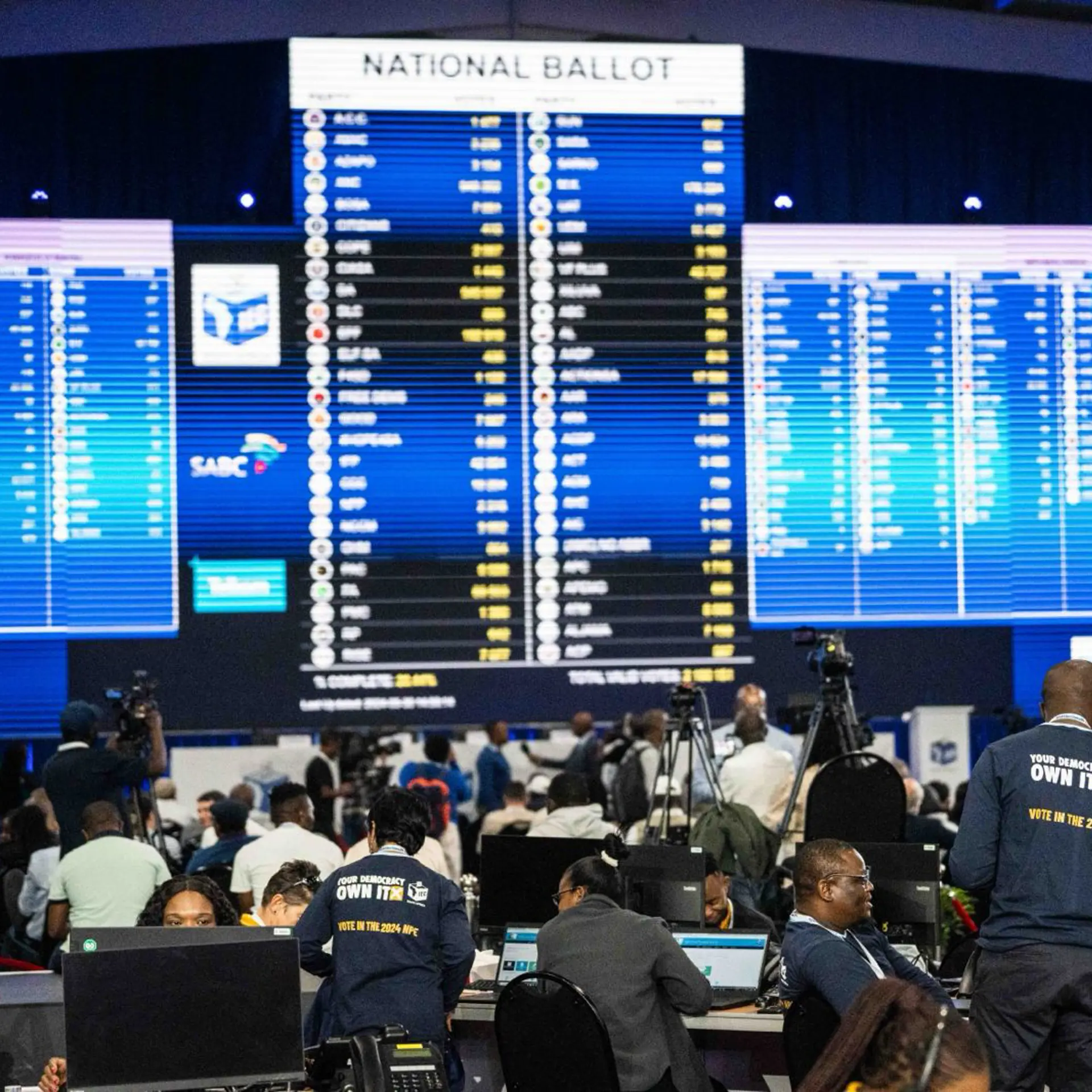
The national IEC results operations centre at Gallagher Estate, Midrand, on 30 May 2024. Picture: Jacques Nelles/Eyewitness News
Jacques Nelles/Eyewitness News
The long queues that plagued the 2024 elections appear to be a thing of the past, with nine out of ten voters spending no more than 30 minutes waiting to cast their ballots in this week's local government elections.
That's according to the HSRC's latest Election Satisfaction Survey findings, which were released a short while ago at the IEC Results Operations Centre in Midrand.
The survey paints a largely positive picture of voters' experiences at the polls.
The research also found that 95 percent of voters were satisfied with the service rendered by IEC officials, while the same proportion were confident that their votes remained secret.
Despite the growing number of parties and independent candidates on the ballot, 93% of voters said they could easily identify their preferred candidate or party.
HSRC research director, Dr Benjamin Roberts, said the improvement in queuing times is particularly notable when compared to the 2024 elections.
"What we have found in the 2026 local government elections is that short queuing times improved markedly compared particularly with the 2024 elections and have returned the evaluations back to what we saw in the 2021 level."
However, the survey has also identified areas that still need attention, including voter education and facilities for visually impaired voters, pregnant women and those voting with babies.