JAMIL F. KHAN | Are South Africans abandoning collective freedom for individual advancement?
"A more equal South Africa demands that we invest as much political energy in transforming the conditions from which we seek to escape as we do in securing our own escape from them."
Lebogang Le Kay
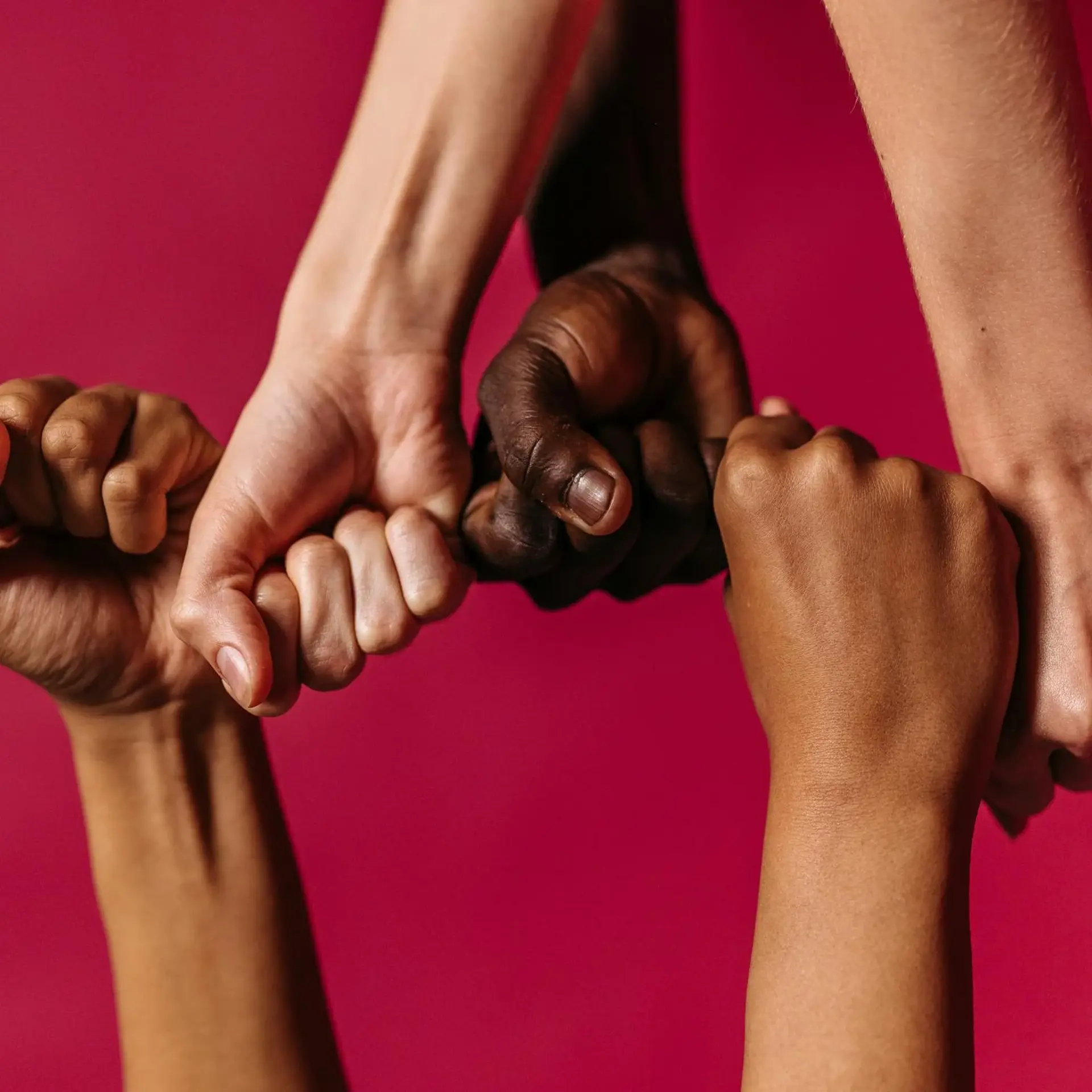
Picture: Pexels
Pexels
The outcome of South Africa’s 2026 local government elections invites a deeper reflection on the kind of society we are becoming.
Much of the conversation surrounding the elections has understandably focused on the declining electoral fortunes of the ANC, the changing loyalties of voters and the emergence of new political alternatives.
Yet beneath these developments lies a more consequential shift in our political consciousness.
We appear to be moving away from a collective responsibility to create a more equal society, increasingly organising our political choices around immediate personal concerns, individual aspirations and narrower conceptions of belonging.
The political project of creating a society in which everyone can live with dignity is gradually losing its centrality in our understanding of democratic citizenship.
According to the Electoral Commission, voter turnout increased from 45.9% in 2021 to approximately 52% in 2026. The ANC secured approximately 31% of the vote, the DA 24.6%, MK approximately 9.6% and ActionSA 5.7%.
Together, the latter three parties accounted for almost 40% of the vote. While election results cannot establish the individual motivations of voters, the political positions that have gained considerable electoral support deserve closer examination.
The appeal of these parties speaks to different anxieties, grievances and aspirations. For some, the overriding concern is municipal efficiency and the protection of their standard of living. For others, nationalist rhetoric offers the promise of economic security through the prioritisation of South African citizens.
For others still, cultural nationalism offers a sense of recognition and the restoration of a political identity they believe has been compromised. Running through these ostensibly different political desires is a narrowing of the constituency towards whom we understand ourselves to have a responsibility.
The DA's electoral performance is particularly instructive. Its promise of competent municipal administration has made it an attractive alternative to the ANC. However, its record of governance also demonstrates how administrative efficiency can coexist with institutionalised exclusion.
The DA-led City of Cape Town's R114 million N2 security wall project, which threatens to reinforce the spatial isolation of Black communities such as Nyanga, exemplifies this contradiction.
Its approach to homelessness through punitive municipal by-laws and its opposition to broad-based black economic empowerment (BBBEE) further illustrate the consequences of a political philosophy that does not sufficiently reckon with the structural production of inequality.
When these positions become politically tolerable in exchange for reliable municipal services, we must consider what has happened to our commitment to social justice.
The desire for functioning infrastructure, safety and competent government is entirely legitimate.
What should concern us is the willingness to compromise the dignity, protection and belonging of others in pursuit of these legitimate needs.
ActionSA's growing electoral support reveals another dimension of this political shift. The party has made immigration enforcement central to its political identity, with Herman Mashaba explicitly stating during the election campaign that undocumented migrants would be unwelcome in municipalities governed by ActionSA.
Although the party does not explicitly endorse xenophobia and advocates immigration reform, its political messaging increasingly situates questions of economic security and municipal functionality within the politics of national belonging.
The danger of this rhetoric lies in its capacity to transform legitimate economic grievances into support for the exclusion of people who are themselves economically vulnerable.
Our concern for inequality becomes conditional on the nationality of those experiencing it. In a country whose liberation was enabled by solidarity across national borders, this represents a profound impoverishment of our political imagination.
The electoral appeal of MK similarly demonstrates how legitimate grievances can coexist with exclusionary political sentiments. While the party advances important questions about land dispossession, economic redistribution and the persistence of apartheid-era inequalities, it also promotes cultural conservatism, greater authority for traditional leaders and the replacement of constitutional supremacy with parliamentary supremacy.
Jacob Zuma's publicly expressed hostility towards same-sex relationships further illustrates the dangers of a political vision in which cultural recognition for some potentially comes at the expense of the rights of others. Economic emancipation cannot constitute a comprehensive vision of liberation while leaving other forms of oppression intact.
Despite their ideological differences, the electoral appeal of these parties requires us to consider how selectively we have begun to practise solidarity.
We are increasingly drawn towards political formations that recognise our particular grievances, even where their broader political commitments threaten the interests of others. Our willingness to identify injustice appears increasingly dependent on our proximity to it.
Perhaps this is partly a consequence of how we have come to understand freedom in democratic South Africa. Over time, freedom has become increasingly synonymous with personal upward mobility.
The ability to accumulate wealth, acquire property and move into better-resourced neighbourhoods has become a dominant measure of emancipation. Within this understanding, the aspiration is to escape the conditions produced by inequality rather than to transform the conditions themselves.
Personal advancement is entirely understandable in a society that historically denied opportunities to the majority of its population. However, when upward mobility becomes the primary horizon of our political aspirations, our relationship with those who remain disadvantaged fundamentally changes.
Their struggles become increasingly peripheral to our own. Having escaped certain manifestations of inequality, we become less invested in dismantling the systems that continue to produce them.
The failure of the ANC has undoubtedly accelerated this process.
Decades of corruption, mismanagement and unfulfilled promises have exhausted people's faith in collective transformation. For many of those living in poverty, electoral participation has become an exercise in repeatedly investing hope in institutions that have failed them.
Although voter turnout has increased, the continued absence of almost half of registered voters should compel us to consider the extent to which democratic participation has lost its transformative promise.
What is particularly concerning is that the abandonment of the ANC appears to coincide with the abandonment of some of the emancipatory ideals that once justified its political existence.
Equality, redistribution and solidarity belong to a much larger moral and political project than any political party. We cannot relinquish our commitment to these ideals simply because those entrusted with their realisation have failed.
Our responsibility towards one another must extend beyond the circumstances we personally inhabit. It requires recognising that other people's experiences of oppression have a bearing on the kind of society in which we all live.
It requires a political consciousness capable of accommodating interests beyond our own, even when doing so demands concessions from us.
Inequality cannot be sustainably escaped through individual achievement. Its consequences will eventually penetrate the spaces of relative privilege that we have worked so hard to occupy.
The more unequal our society becomes, the greater the resources we will expend attempting to insulate ourselves from the conditions we have collectively failed to change.
We must recover an understanding of democratic citizenship as a responsibility towards others.
Our political choices should reflect a concern for the lives of people whose circumstances, identities and struggles differ from our own.
The measure of our collective progress must encompass the lives of those who have benefited least from democracy.
Ultimately, the freedom we should aspire to is one that does not require us to escape one another.
A more equal South Africa demands that we invest as much political energy in transforming the conditions from which we seek to escape as we do in securing our own escape from them.
Dr Jamil F. Khan is an award-winning author, critical diversity scholar, and research fellow at the Johannesburg Institute for Advanced Study.