MANDY WIENER | Coalition govt negotiations: Lessons from 'The Deal'
'As we enter into a period of uncertainty and horse trading to establish metro and council municipalities, this is what to watch out for,' writes Mandy Wiener.
Mandy Wiener
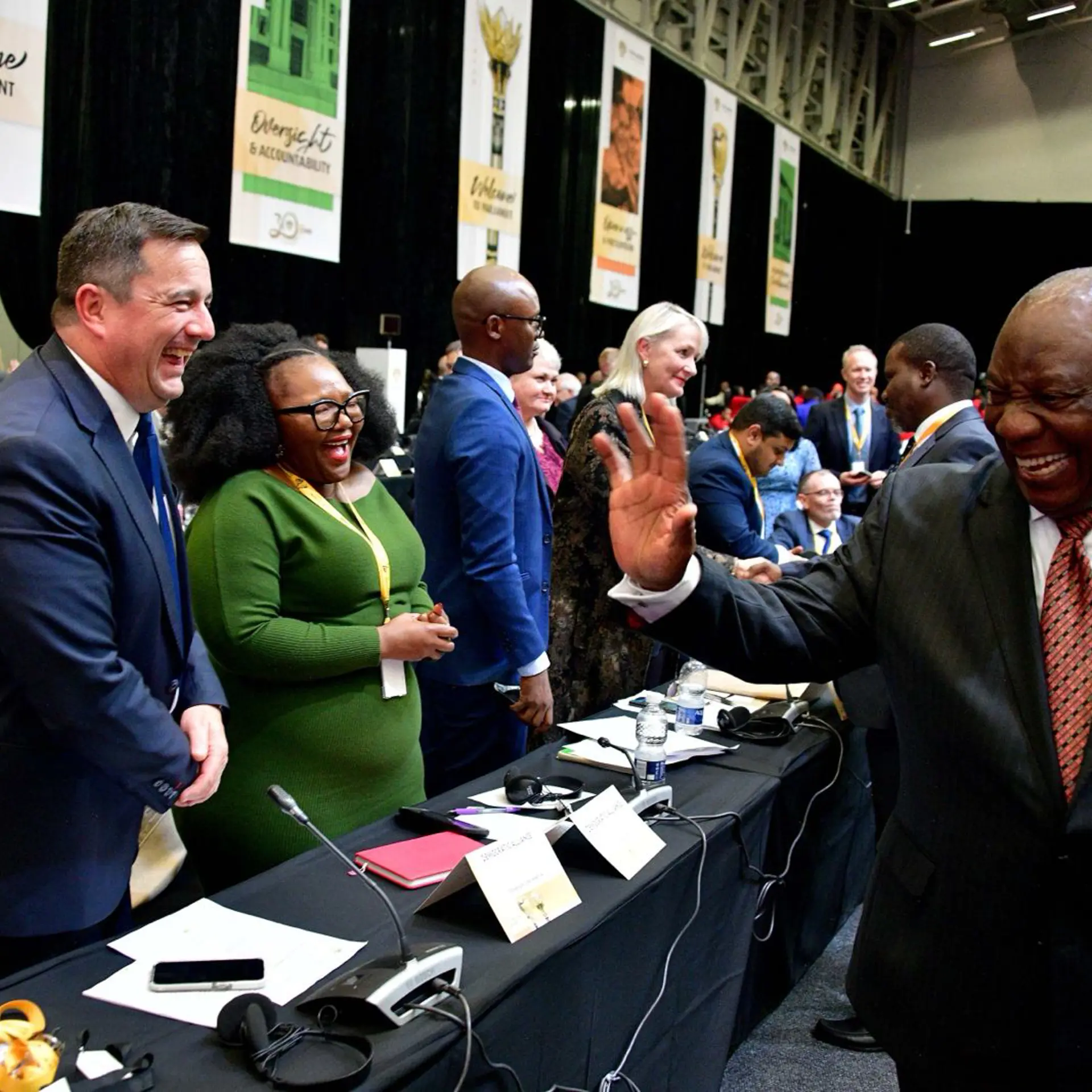
FILE: The DA and ANC entered into an arrangement in the Government of National Unity. Picture: GCIS
GCIS
Last year I published a book called The Deal, which told the behind-the-scenes story of how the Government of National Unity (GNU) was negotiated in 2024.
Here are some of the lessons I’ve learnt from interviewing almost all the politicians involved in the coalition talks.
As we enter into a period of uncertainty and horse trading to establish metro and council municipalities, this is what to watch out for.
THE LARGEST PARTY LEADS THE NEGOTIATIONS AND HAS LEVERAGE
The general consensus amongst parties is that whoever has the largest support leads the negotiations. That could be impacted if parties decide to negotiate on a national level versus at the metro level. The African National Congress (ANC) has the most votes nationally, but the Democratic Alliance (DA) has the most votes in most metros. So who leads the negotiations?
What the ANC did so well was that it managed the 2024 negotiations by holding bilateral meetings. It set up shop at the Inanda Club, and it became a dentist's waiting room with each party delegation waiting for its turn to meet with the ANC negotiating team. The ANC was able to keep other parties separate, and they never all met together in one room.
PERSONAL RELATIONSHIPS MATTER
Many politicians get on well on a personal level. They work together in Parliament and live in the same village. But many of them also have long histories, and personal grudges exist. What I learnt from interviewing politicians across the spectrum is that some put on a show of hating one another for the media and then love each other in person. But some absolutely despise one another.
There is a visceral reaction to working with one another and even being in the same room. Don’t underestimate the value of personal relationships. These exist between some individuals across party lines. Herman and Helen can’t stand one another. But can they work together?
DON’T UNDERESTIMATE THE ANC NEGOTIATORS AND RAMAPHOSA AS A STRATEGIST
I interviewed the President about his role in the negotiations, and I was struck by how strategic he was during the talks, even though he wasn’t in them himself. The ANC ran the clock down on the parties; they kept their options open; they played everyone.
The ANC also had “flexibility of strategy”.
It will be flexible around tactics to reach a deal and will be willing to do almost anything to stay in power. However, the DA has much more leverage this time around, and it is a party full of clever strategists.
CONCENTRATED TIME PRESSURE WILL PLAY THE ROLE
Politicians find themselves under enormous pressure from multiple quarters. They only have fourteen days to reach a deal, which is madness. In European countries it can take eighteen months to negotiate a coalition. They will be getting calls from party veterans, business people, funders, their neighbours and their mothers-in-law to try and make a deal.
EACH PARTY MUST WORK OUT WHAT ITS BATNA IS
A BATNA is the Best Alternative To A Negotiated Agreement. Knowing your BATNA helps you assess the value of any proposed deal and ensures you don’t settle for something worse than what you could achieve on your own. Parties need to work out what the other party's BATNA is. Once they work that out, they will know what the value is of the offer on the table.
If they are not going to get the deal they are after, what are they willing to settle for?
RED LINES FADE AWAY
Some parties went into the negotiations with hard red lines. Things they were not willing to compromise on. As a starting point in talks, this can appear to be uncompromising. Over time, these tend to erode. Red lines become pink lines and then disappear. What also emerged was that the ANC and the DA had more in common with centrist policies and constitutionality than they were keen to admit.
THE ROLE OF INTERMEDIARIES AND BACKCHANNELS
Formal negotiations take place between negotiating teams or party leadership, but there is a huge amount that goes on in back channels. Some of these back channels are formally established between key points people to iron out the minutiae and hammer out the brass tacks. But often these are informal between self-appointed individuals, usually business people.
There will be pressure from big business for a centrist coalition, particularly in Joburg, to get the engine room of the economy working.
GAUTENG IS NOT SOUTH AFRICA
Party negotiators could not get a deal over the line in Gauteng in the same way they did nationally. This was because of personal politics and factional politics. The ANC in Gauteng did not want to work with the DA. The parties blamed each other for collapsing the talks. The question now will be whether the parties can set their differences aside and talk.
AT METRO LEVEL, KINGMAKERS HAVE A BIGGER ROLE
South Africa doesn’t have a ‘threshold’ for parties to enter into government like that which exists in other countries. This means parties can have one seat, as the NFP had in KZN, and swing an entire metro. The NFP could have decided to go with the MK party in KZN, but instead it went into a deal with the IFP, DA and ANC. Kingmakers are going to play a big role in these negotiations.
One year into the GNU, I interviewed some of the politicians about the lessons they had learnt. Some of what they had to say was insightful.
Helen Zille on the ANC: “They are totally devious, the end justifies the means, they don’t read agreements, they don’t stick to agreements, they don’t stick by their word, they are as inconsiderate as you will get. Anybody who thinks that the ANC is a rational, fair and rule-abiding partner is deeply mistaken.’”
Pieter Groenewald told me that the glue that will keep the GNU together is constitutionality because ‘all of the parties confirmed that they recognise the Constitution of South Africa – that’s part of the fact that MK and those people are out because they say they don’t recognise the Constitution.
Velenkosini Hlabisa believes the ingredients required are "transparency, engagement and consensus".
Herman Mashaba told me: “We will work with anyone that would actually put the interests of South Africa first. I think we have to have a proper coalition arrangement that is publicised, because obviously I think to legally enforce the coalition agreement it’s difficult, but we must commit to a coalition agreement, not a letter of intent. We have to have a coalition agreement.”
And someone who knows a great deal about negotiations is our current ambassador to the United States, Roelf Meyer.
His advice for today’s negotiators?
“The starting point is to talk, and they must be serious about it. I would say, as of the moment the election results are final, they should reach out and talk to each other, especially the major parties.
“The parties with the biggest support at the different metro level and local municipalities all round and they should talk to each other with a view to establish governments and making sure they agree on the basis of cooperation and joint decision-making going forward; that will ensure good services and what is required by the citizens of the city or town, and that is fundamental,” explained Meyer.
“Talk first and then have proper dialogue and negotiate the substance. That is the recipe that we followed more than thirty years ago, and in my observation it worked in other places, and we just have to repeat.”