MK Party's Bongani Baloyi outlines plan to fix Johannesburg's finances
MK Party mayoral candidate Bongani Baloyi outlined plans for Johannesburg's finances, infrastructure, CBD renewal and township electricity generation.
Kabous Le Roux
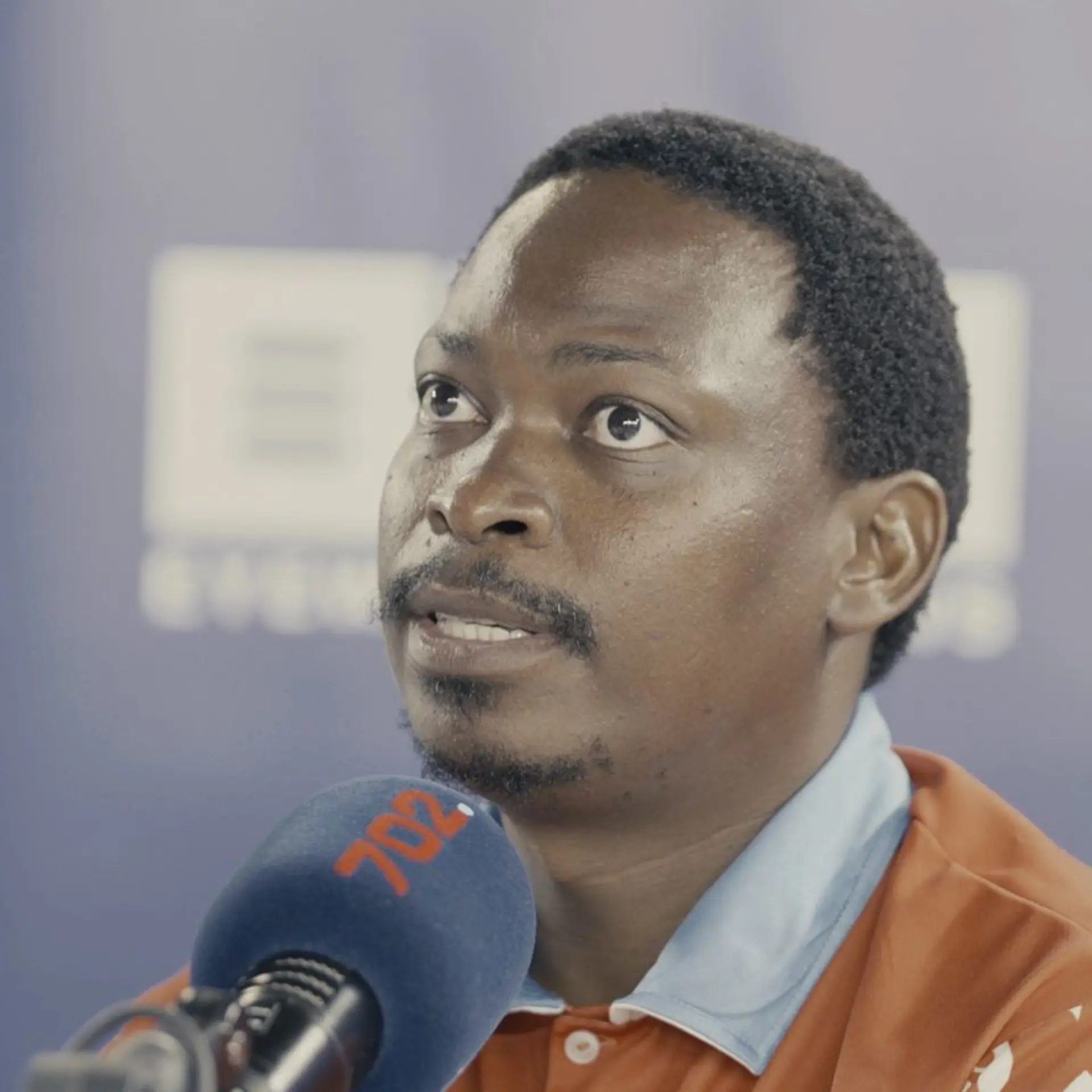
MK Party Johannesburg mayoral candidate Bongani Baloyi outlined his plans to address the city's financial challenges, infrastructure problems and CBD decline ahead of the local government elections. Picture: Jacques Nelles/Eyewitness News
Jacques Nelles/Eyewitness News
The MK Party's Johannesburg mayoral candidate, Bongani Baloyi, says the city needs strict financial discipline, with borrowing reserved for infrastructure projects and spending commitments carefully managed, including in the event of a coalition government.
Baloyi was speaking on 702 ahead of Wednesday’s local government elections, where he outlined the party's proposals for addressing Johannesburg's financial and infrastructure challenges.
He said the city could not afford to overcommit its resources and needed to prioritise sound financial management.
"The City of Johannesburg must become, and then continue to be, an ongoing concern," Baloyi said.
He argued that every spending commitment should be properly budgeted for, regardless of which political parties might form part of a future coalition.
"We cannot overcommit the city and strain its resources to the detriment of the city," he said.
Related articles:
— LGE 2026: Four mayoral candidates make their final pitches to restore Joburg
— Helen Zille outlines plan to fix Johannesburg's finances and water crisis
MK Party says borrowing should fund infrastructure
Asked whether the party would place limits on borrowing, Baloyi said municipal borrowing should primarily be directed towards capital expenditure rather than general spending.
He cited electricity, water and roads infrastructure as examples of areas where borrowed money could be used.
"When you engage in borrowing, it has to deal with infrastructure from a Capex perspective and how you recapitalise the infrastructure," he said.
Baloyi said borrowing would be limited to capital expenditure, including electricity infrastructure, water infrastructure and roads.
He also suggested that the city could explore alternative financing arrangements, particularly involving the private sector, to support infrastructure development.
Plans to reclaim Johannesburg's CBD
Baloyi also outlined the MK Party's proposals to revive Johannesburg's central business district, arguing that stronger law enforcement and the enforcement of municipal bylaws would be essential.
The party wants to establish a new unit to deal with aspects of the Immigration Act at local government level, working alongside the Department of Home Affairs, the South African Police Service, the Department of Justice and the Johannesburg Metropolitan Police Department.
He said the party wanted to reclaim buildings in the CBD, with people occupying them temporarily housed while the properties were restored.
The private sector would also be brought in to help renovate and maintain some of the buildings.
Baloyi argued that restoring basic infrastructure, improving cleanliness and enforcing bylaws could help make the CBD more attractive to families and businesses.
He said residents were frustrated because they were effectively paying twice for services.
MK Party proposes township microgrids
One of the party's proposals for household economic recovery involves moving townships away from the Eskom or City Power grid towards locally generated electricity through microgrids.
Baloyi said the party believed there was significant potential for electricity generation in townships and claimed that greener energy initiatives could meet about 15% of Johannesburg's electricity needs.
The proposal would also involve introducing a social tariff for township households.
Under the plan, households would be able to use the electricity they generate towards paying their municipal accounts, alongside a small, flat social tariff.
Baloyi said the approach would move the party's focus away from conventional local economic development towards what he described as "household economic development and recovery".
He argued that turning households into electricity generators could help make them more financially viable and reduce their dependence on conventional electricity supply arrangements.