No coalition deal? What happens if municipal councils miss Friday's deadline?
Coalition negotiations are still underway in parts of South Africa, so what happens when councils fail to meet the deadline?
Sara-Jayne Makwala King
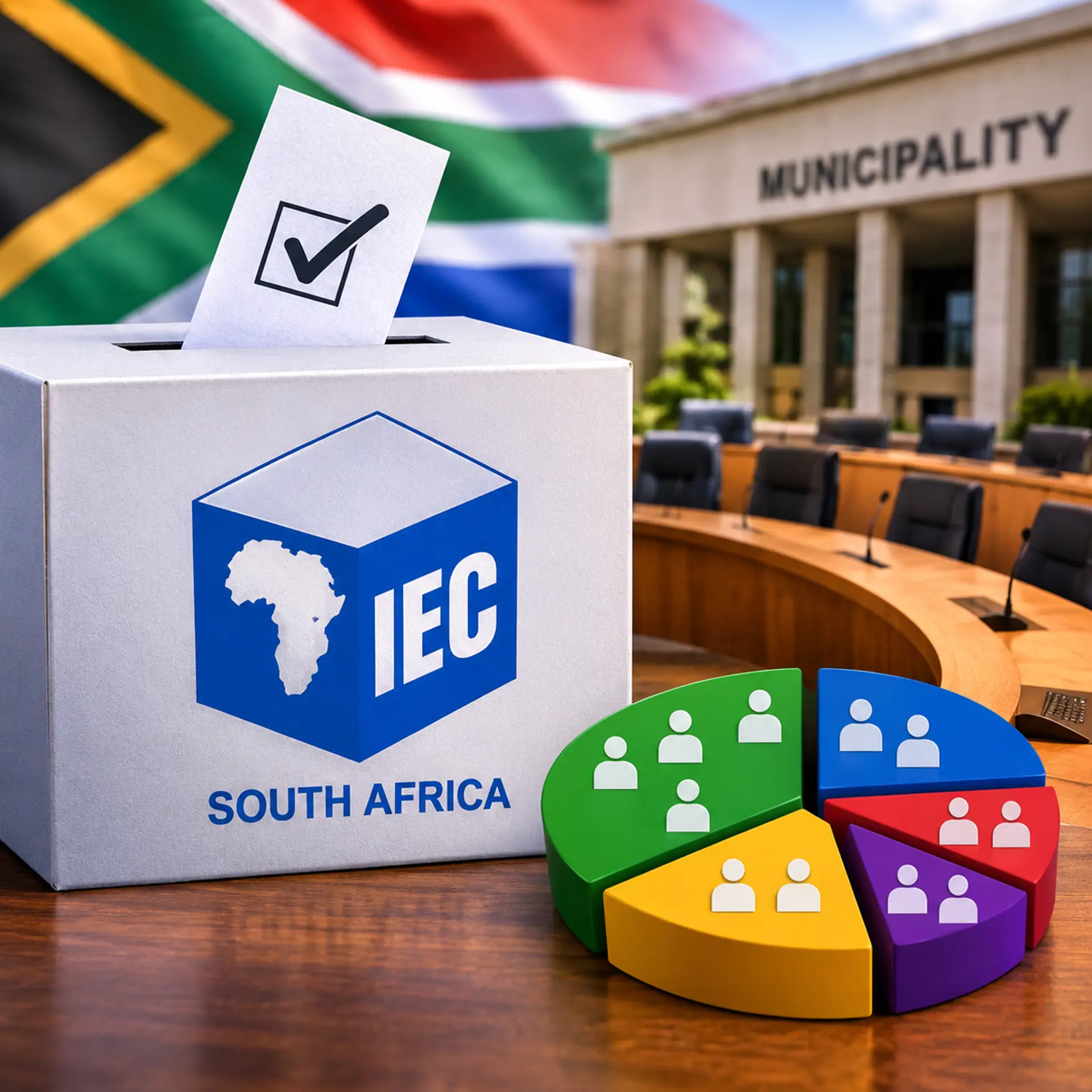
The ward seat goes to the candidate who receives the most votes. Photo: AI illustration
AI illustration
The deadline is fast approaching for political parties to ensure newly elected municipal councils hold their first sitting.
They have until this coming Friday, 27 November, to convene their inaugural meetings following the 2026 local government elections.
But what happens when political parties cannot agree on who should govern?
Speaking to CapeTalk/702's Africa Melane, South African Local Government Association (SALGA) CEO Lance Joel explained what the law requires.
"The Municipal Structures Act specifically requires that the first meeting must take place within 14 days of the declaration of the results."
But while a speaker must be elected at that first meeting, there is no specific timeframe for electing an executive mayor, deputy executive mayor or whip.
But with the clock ticking and some councils yet to conclude their coalition negotiations, what should happen if a municipality fails to fulfil its statutory obligations?
Joel explained that there are provisions contained within Section 139 of the Constitution.
"It allows the provincial executive to intervene in the municipality when it cannot or does not fulfil an executive obligation."
That provision, if employed, could ultimately result in the dissolution of the council and fresh elections.
But Joel explained that another election would not necessarily deal with any political deadlock.
"You may just have the same result, same people being re-elected."
So, who's running our municipalities while coalition negotiations continue?
"In the case of Johannesburg, we have a city manager. In the case of every other municipality, we have a municipal manager. They are at the head of the administration, and therefore they are literally in charge of ensuring that services continue."
Even so, while there is no administrative 'gap' during this time, Joel explained that elected representatives are needed.
"It's necessary to have the public representatives to ensure that there's proper oversight, but also strategic guidance on the execution of basic services." But he added that the situation is 'not ideal'.
The current situation is playing out against the backdrop of the proposed Municipal Structures Amendment Bill, also known as the Coalitions Bill, which was supposed to be passed before the elections.
Joel said those legislative reforms, aimed at regulating coalition governments, could help address political instability, but that laws alone would not solve the problem.
"It does require political maturity. It does require political parties to act more in the interest of the people that they serve."