Parties brace for complex coalition talks as fragmented results roll in
With 37% of voting districts now counted, political parties are bracing for tough coalition negotiations, as preliminary election results point to a fragmented political landscape.
Dimakatso Leshoro
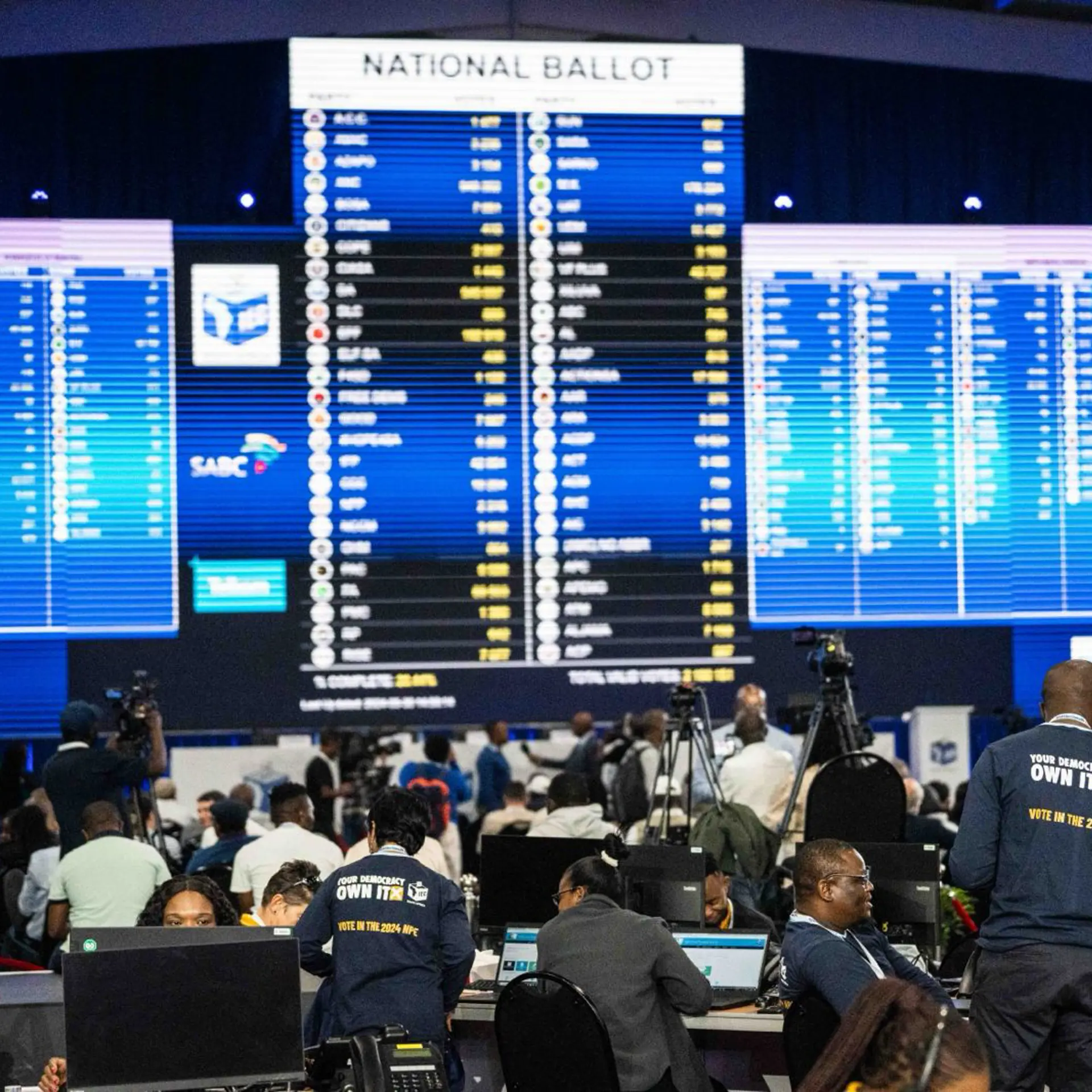
The national IEC results operations centre at Gallagher Estate, Midrand, on 30 May 2024. Picture: Jacques Nelles/Eyewitness News
Jacques Nelles/Eyewitness News
With 37% of voting districts now counted, political parties are bracing for tough coalition negotiations, as preliminary election results point to a fragmented political landscape.
The ANC said that although it remains the country’s biggest party, it acknowledges that its performance is not looking good.
Meanwhile, with the DA leading in Gauteng and the ANC at a distant second, the party said it is willing to talk about issues and not positions.
ActionSA said it is open to working with any party, provided its principles are respected.
ActionSA national chairperson Michael Beaumont said the party will not enter coalition talks with red lines, but will insist on clear principles and accountability.
"We are willing to negotiate in the interest of residents with any political party, provided they meet those non-negotiables I've outlined. ActionSA must be open to all parts of a coalition negotiation. We're not going to enter coalitions from a point of view of red lines,” said Beaumont.
The DA said it has not ruled out working with anyone, but the negotiations will be shaped by the outcome of the vote.
“We don't want to talk about allocation positions; we want to talk about how to get systems working in municipalities."
In the same breath, the ANC said it will first assess its experience in the government of national unity before deciding which parties to partner with at local level.
ANC KwaZulu-Natal provincial secretary Mdumuseni Ntuli said the party must consider whether to repeat its existing arrangements or take a different route.
“We're going to have to do a proper assessment of the coalitions we entered into post the 2024 provincial and national elections. What lessons have we acquired out of that? Do we want to replicate it with the same parties when it comes to local government, or do we need to take a different route?” said Ntuli.