South Africa unlikely to see one-party rule again, says Roelf Meyer
Roelf Meyer believes South Africa is unlikely to see single-party rule again, as the former negotiator shares his thoughts on the ANC's decline and coalition politics.
Kabous Le Roux
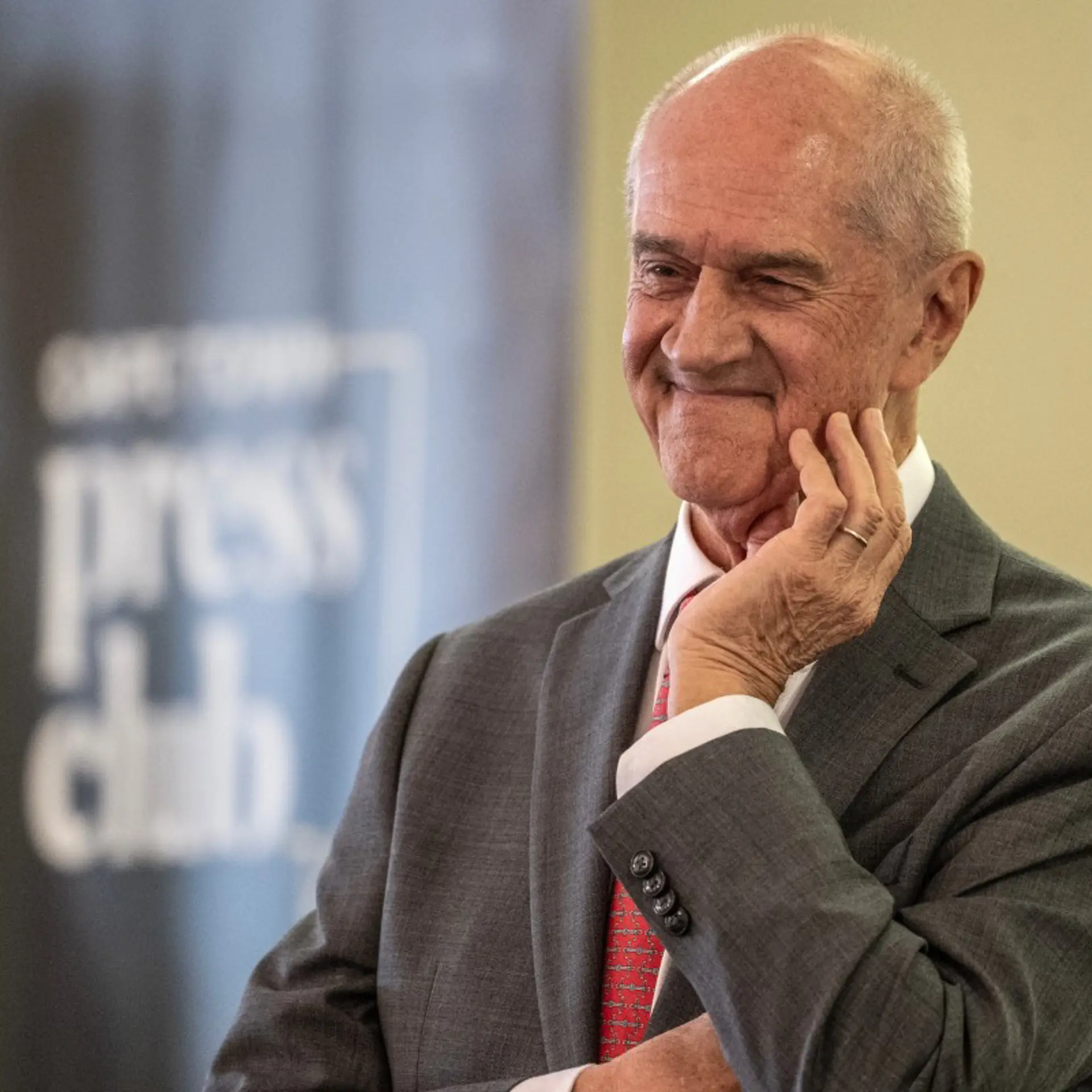
South Africa's ambassador to the United States, Roelf Meyer, whose new memoir reflects on his political career, the negotiations that ended apartheid and the country's changing political landscape. (RODGER BOSCH / AFP)
South Africa is unlikely to return to a system of single-party government for a long time, former apartheid-era negotiator and newly appointed ambassador to the United States Roelf Meyer believes.
Meyer, whose political memoir Roelf Meyer: A Political Memoir has just been released, says the ANC's declining electoral support reflects a pattern seen in other countries where liberation movements have governed for decades before eventually losing power.
Speaking to 702/CapeTalk, Meyer said the ANC's decline was not particularly surprising, pointing to the experience of India's Congress Party, which governed the country for close to 40 years after its liberation struggle.
He believes the changing expectations of South African voters are an important factor behind the country's shifting political landscape.
"The vast majority of South Africans who probably now vote have not been part of the anti-apartheid struggle," Meyer said.
He added that voters were increasingly concerned with their present-day circumstances and whether the ANC was meeting their expectations.
Related articles:
— Roelf Meyer says restoring US-SA relations is vital for economy
— Meyer: Govt has neglected relationships with SAns in diaspora who could ease strained SA-US ties
— SA not losing sleep over G20 snub as focus shifts to B20 business stream, says Roelf Meyer
South Africa heading towards an era of coalition government
Meyer said the election results suggested South Africa was unlikely to see single-party rule again for a considerable period.
"The outcome, I think, indicates very strongly that we will most likely never see a one-party rule again, a single-party rule again, at least not for a long time," he said.
Coalition governments would consequently become a permanent feature of politics at national, provincial and local levels.
Meyer said the development was not unusual when compared with other democracies, adding that the country's democratic system remained strong.
He said voters having the right and opportunity to exercise their democratic choice was something South Africans should protect.
With political parties facing coalition negotiations following the local government elections, Meyer believes they should draw on the lessons of the negotiations that helped bring an end to apartheid.
His advice is for parties to begin engaging with one another as soon as the election results are finalised, particularly those with the biggest support in metropolitan areas and municipalities.
They should establish a basis for cooperation and joint decision-making to ensure effective service delivery.
"The starting point is to talk, you know, and they must be serious about it," he said.
Meyer summarised the approach that helped guide the negotiations more than 30 years ago: "Talk first, then have proper dialogue and then negotiate the substance."
He believes the same approach can work in South Africa's current political environment.
Meyer on the future of South Africa-US relations
Meyer also discussed the implications of the US midterm election results for South Africa's diplomatic relationship with Washington.
He said the outcome could make it easier for South Africa to strengthen its relationship with Congress, although it would not immediately change the challenges facing the country in its dealings with the Trump administration.
Meyer pointed out that the US executive remained unchanged, including the White House, National Security Council and State Department.
He said the relationship continued to be affected by an executive order issued by President Donald Trump against South Africa in February 2025.
"The executive remained the same. There's no change, and there was no vote for change or a vote at all during the past week," Meyer said.
He added that the relationship with the Trump administration would continue to require intensive diplomatic engagement.
However, Meyer was more optimistic about opportunities to build relationships with members of Congress, where there would be new faces in both the Senate and House of Representatives.
He said South Africa would immediately begin preparing to establish those contacts, although the new leadership in the two houses would only take over in January.
Meyer acknowledged that South Africa had neglected its relationships with Congress over a period of time and said the country needed to take advantage of the opportunity to improve access to lawmakers.
A memoir shaped by decades of political negotiations
Roelf Meyer: A Political Memoir, written by Meyer as told to Anneliese Burgess, traces his political career and his personal transformation, including his involvement in the negotiations that led to South Africa's democratic transition.
Meyer said the book had been developed over several years through interviews with its author.
He said its release coinciding with the announcement of his appointment as South Africa's ambassador to the United States was not planned.
The publishers were pleased with the timing, he said, but the memoir had not been deliberately linked to his diplomatic appointment.